
Antique door restoration protects craftsmanship, character, and architectural importance that can disappear when an original door is replaced too quickly. It may seem like replacing them is the quickest way to fix wear, decay, or corrosion, but the real costs are frequently hidden: lost heritage, lower-quality materials, disposal/installation labour, and a less interesting home. This blog talks about those hidden costs, compares replacing something with hiring a professional to fix it, and shows how Perma Seal’s restoration services keep things looking good and working well while adding long-term value.
Why should you do more than just replace your old doors quickly?
Antique wood doors, which are made of solid hardwoods, have elaborate mouldings, and original hardware, frequently have features that modern mass-produced doors don’t have. They are substantial, well-made, and meant to last for decades. They also add to the authenticity and value of historic properties.
Many homeowners simply think about the expense of the new door when they think about replacing it. They don’t think about things like whether the new door will fit the original scale, dimensions, and details. Will the new material age as well or be just as strong? Will the installation mess up the trim, frames, or heritage finishes around it? That’s when hidden costs come into play.
The Visible & Hidden Costs of Replacing an Antique Door
Visible Costs
- Buying a new solid wood door, especially one that is custom-sized, along with the hardware, hinges, and locks.
- Work to take down the old door, take off the jamb if necessary, trim it, and make modifications.
- Finishing the new door means priming, painting, or staining it to match the rest of the room.
- Throwing away the old door and trash.
Costs that are not obvious or are not well known
Loss of craftsmanship and character: Many old doors contain original glass and hardware, joinery, hardwoods, or hand-carved mouldings. The Society for the Protection of Ancient Buildings advises that old doors can often be repaired and upgraded, with replacement treated as a last resort. When you replace them with a regular modern slab, you often lose these one-of-a-kind qualities.
Frame and surrounding fabric disturbance: Putting in a new door may mean changing the frame, reducing the mouldings around it, possibly touching up historic finishes, or changing the fit, which could add to the expense or damage the historic integrity.
Material mismatch and longevity: The thickness, wood quality, and durability of a modern door may not be the same as those of the original. It might warp with time or need extra care.
Matching aesthetics: Custom doors that fit the historic size and scale cost more because they have to match the style and dimensions. A replacement that doesn’t match could look out of place, which could lower the value of your home and make it less appealing from the street.
Cost to the environment and for garbage: Throwing away a heavy hardwood door is a waste. Restoration uses materials that are already there, which is in line with ecological principles.
Opportunity cost of lost value: For heritage homes, keeping the original doors may make the home more valuable and appealing to buyers. Replacing them with a generic factory door may lower that value.
Unseen damage found during replacement: Once the removal starts, more problems, including rot in the frame, settling of the sub-frame, or misaligned hardware, may come to light, which will raise the cost even more.
Why is restoration better than replacement?
Lower initial cost (if done correctly)
Restoration isn’t always inexpensive, but it usually costs less than replacing a door completely, including taking it down, throwing it away, getting new hardware, and putting it back up. One source in the business says that refinishing or restoring a door can cost a lot less than replacing it, especially if the structure is still in good shape.
Keep the original quality and character
Older doors may have hardwoods with tighter grains, better workmanship, and one-of-a-kind designs. A repair keeps certain features, while a replacement might make a door that doesn’t have the same texture, size, or authenticity.
Lessened disruption to nearby fabric
Most of the time, professional repair works with the door and frame that are already there. This means that large changes, pruning, or repainting of nearby areas are less necessary. This saves money, time, and the original finishes on historic buildings.
Benefits for the environment and long-term health
Using doors that are already there cuts down on waste, saves materials, and fits with eco-friendly design. Modern papers stress that refinishing is the better choice for the environment.
Better return on investment
Keeping original characteristics in heritage homes or homes with character makes them more valuable and attractive. An original door that has been well-restored might be a feature instead of a cost centre.
When does it still make sense to replace?
- In some cases, replacement may be the best option, even if restoration is usually better.
- The door or frame is so badly damaged that it can’t be fixed (serious decay, warping, or security issues).
- Restoration won’t make your home more energy-efficient or safer (for example, you need a multi-point lock system or an insulated door that the old door can’t hold up).
- The stylistic or function needs have changed (for example, you need a fire-rated door, you’re making an opening bigger, or you’re switching to triple-glazed panels).
- Matching the cost of a restoration is about the same as or more than the cost of a high-quality replacement, and you value current performance over heritage character.
In all of these situations, you should know all the costs, even the ones that aren’t obvious, before you replace something.
What Perma Seal Restoration Looks Like
At Perma Seal, the restoration method is designed to keep the character, improve performance, and last for a long time. Important parts are:
- Carefully look at the current door and frame. Pay attention to the wood’s condition, how well the hardware works, and how well they fit and line up.
- Selective repairs mean only restoring the broken parts using the proper hardwoods, matched mouldings, and joinery processes.
- Keeping or modernising hardware: When possible, the original hinges, locks, and mouldings are carefully preserved. People pick out new fittings that go with the style of the moment.
- Finish and seal: Using high-quality primers, stains, or paints will make sure that the finish lasts, looks nice, and keeps moisture and UV rays out.
- You don’t have to replace the whole door if you can add weather stripping, draught seals, or better core or locking systems.
- Heritage advice: Perma Seal makes sure that the repair fulfils heritage criteria, keeps the original profiles, and stays true to the original. This is quite important for older homes.
The Comparison of Hidden Costs: Restoration vs. Replacement
The difference in cost between restoration and replacement isn’t always clear in the quote; it becomes clear over time. A full replacement usually needs additional raw materials, work, and finishing work. You’re paying for the door itself, as well as taking it down, getting rid of it, and fixing the frames and trims next to it. On the other hand, restoration only focusses on what really needs fixing. Skilled craftsmen fix or replace parts like lower rails that have rotted or panels that are out of alignment while keeping the rest of the structure intact.
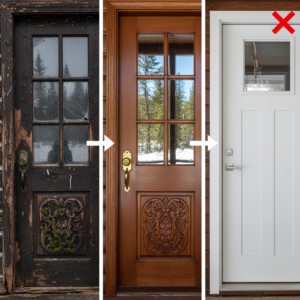
In the long run, refurbished doors last longer than many new doors. This is because the original hardwood has been stable for decades or perhaps centuries. After being treated, sealed, and fortified, it can last for many more years with no maintenance. On the other hand, a factory-built substitute may wear out faster, need refinishing sooner, and be less durable overall.
When you add in the environmental and aesthetic value, the financial benefit of restoration becomes even evident. You’re saving money on materials, making less waste, and keeping your home’s unique charm, all of which make it more likely to sell. In short, restoration almost always gives you the best mix of cost, quality, and authenticity, even when replacement may seem like the easiest option.
Tips for Homeowners Considering Antique Door Restoration
- Start by carefully checking for soft patches, rot at the bottom, warping, misalignment, and worn hardware.
- Also, check to see if the frame is in excellent shape. Sometimes the door slab is OK, but the frame around it is damaged, which affects whether restoration is possible.
- Think about what you value more: a real style or modern performance (or both).
- Get estimates for both restoration and replacement, and make sure the restoration estimate includes any hidden repair costs.
- Make sure the restoration business selects materials and profiles that work together. This is especially crucial for historic properties.
- Find information about the warranty on the finish, how to preserve it from moisture and UV rays, and how often it needs to be cleaned.
- If you decide to replace the door, make sure that the new one matches the property’s scale, style, and finish. Also, ask for a comprehensive breakdown of all expenses, including materials, labour, disposal, and frame changes.
Closing Thoughts
It may appear simple to replace an old door, but most people do not consider all of the repercussions, such as sacrificing workmanship, harming the environment, altering the structure around it, and impacting its long-term value. Restoration is the better option since it preserves the character, costs less, causes less bother, and provides true value. Getting excellent restoration from the Perma Seal is more than just a way to keep things in good shape for people who own historic homes or appreciate uncommon architectural details. It’s also a commitment to strength, style, and sustainability.
0 Comments